
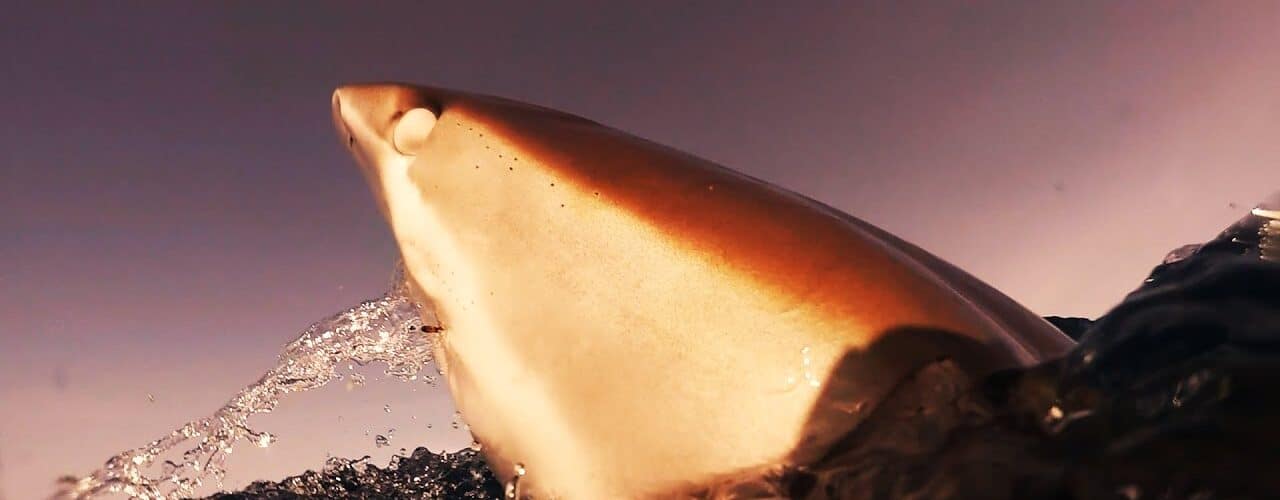
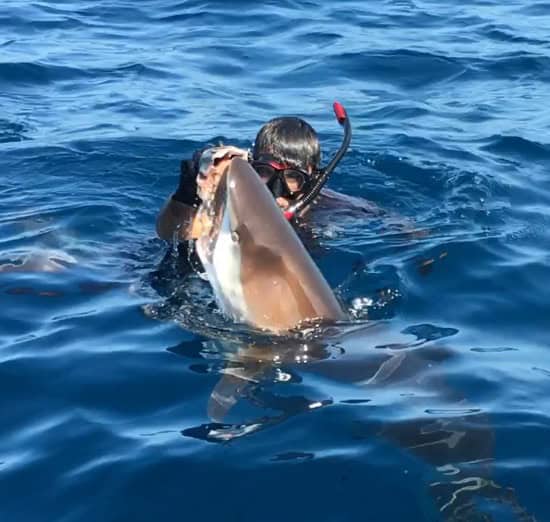
A nice photo of me and a silky shark breaching through the water surface
A Few Considerations about Shark Feeding
The topic of “shark feeding” has generated controversy for several years.
Shark diving companies located in South Florida, California, the Gulf of Mexico and a few other places feed sharks because it is the only reliable way to bring them close to their clients.
Over the years, bills have been put forward to ban the practice of “shark feeding” (this is the name of the practice of attracting sharks and keeping them close by feeding them) in federal waters, considering it dangerous, comparable to the practice of feeding bears or alligators.
The supporters of these bills and in general the people involved in the world of diving who are against “shark feeding” are of the idea that the practice of feeding sharks can modify their behavior and induce them to associate people with food.
This behavior is scientifically called “Conditioned Response” or “Pavlovian Response”. And this puts divers in danger. Current law prohibits this practice in State waters but does not regulate it in federal waters farther from shore.
But there is the other side of the coin and another point of view.
Operators of companies specialized in shark diving play a vital ecological role because they show the reality of a much misunderstood species that suffers terribly due to industrial fishing. Shark populations around the world have suffered dramatic declines due largely to demand in Asia for shark fin soup, an expensive delicacy.
There is a lot of negative and misleading media publicity about sharks. That they are dangerous, that they are murderers. Of course they are, but not towards people.
The only way that ordinary people have to know about these animals are films like “Jaws” rather than the various ridiculous “Sharknado” or when they make the news because they have “attacked” someone. However, when ordinary people are in the water and observe this animal swimming calmly around them, this majestic and fascinating creature, you can see the transformation. When people leave they have acquired more knowledge, in the field, firsthand, about sharks, they have seen what they really are.
Most people come to the excursion skeptical, sometimes fearful, with prejudices, but everyone leaves as a shark advocate. And this is very important for the protection of these animals, because let’s remember that we tend to want to protect what we know, not what we have prejudices about.
The supporters of shark feeding therefore say the practice is a good thing, good for sharks and helps spread knowledge about shark safety and their habitat.